

TPE zur Anwendung im Blow-Fill-Seal-Verfahren
Eine einzigartige Materiallösung für pharmazeutische Verpackungen, die im Blow-Fill-Seal-Verfahren hergestellt werden.
KRAIBURG TPE hat eine Materiallösung für pharmazeutische Verpackungen entwickelt, die vor allem in den Bereichen Usability und Haptik völlig neue Möglichkeiten gegenüber herkömmlichen Lösungen eröffnet. Das neue thermoplastische Elastomer (TPE) entspricht den veränderten Anforderungen der Gesellschaft: ein TPE mit weicher, angenehmer Haptik, hervorragender Gebrauchstauglichkeit, das im Heißdampfverfahren bei 121°C sterilisiert werden kann und auch nach der Sterilisation seine hohe Transparenz und mechanischen Eigenschaften beibehält. Darüber hinaus weisen die TPE eine zertifizierte Co-Recyclingfähigkeit in den PP- und HDPE-Abfallströmen auf.

Mit diesem Material erfüllen wir die bislang unerfüllbaren Forderungen des Marktes, bei gleichbleibender Transparenz die Flexibilität eines Polyethylens mit der Autoklavierbarkeit bei erhöhten Temperaturen eines Polypropylens zu kombinieren. Diese neuen Produkte bieten Herstellern völlig neue und nie dagewesene Möglichkeiten, Flüssigkeiten konform zu verpacken, und mit bisher unerreichtem Nutzen für den Anwender. Gerne stellen wir Ihnen die Lösung bezugnehmend auf Ihr konkretes Projekt im Detail vor.
Oliver Kluge | Market Segment Manager Medical Applications at KRAIBURG TPE
UNSER KNOW-HOW - IHR VORTEIL
Die neue Lösung von KRAIBURG TPE zielt auf Anwendungen ab, die im Blow-Fill-Seal-Verfahren (BFS) hergestellt werden. Die Werkstoffe sind Medical Grade Plastics und fügen sich in das Portfolio der THERMOLAST® M Compounds ein - und erfüllen damit die Anforderungen des VDI 2017. Die neuen High-End THERMOLAST® M Compounds richten sich direkt an Hersteller von medizinischen Substanzen sowie an Entwickler von Verpackungssystemen.
Unsere Partner
Rommelag: Die Verarbeitbarkeit der neuen Compounds wurde für dieses Verfahren bereits durch Tests bei Rommelag bestätigt. Rommelag ist einer der weltweit führenden Anbieter der Blow-Fill-Seal-Technologie, einem Verfahren zur aseptischen Abfüllung und Verpackung von Flüssigkeiten und halbfesten Stoffen.


Borealis hat zur Entwicklung der neuen Compounds beigetragen, und eines seiner Bormed™ medical grades als Basis bereitgestellt. Als einer der global führenden Anbieter fortschrittlicher und kreislauforientierter Polyolefinlösungen hat Borealis mit KRAIBURG TPE zusammengearbeitet und eine Materiallösung entwickelt, die den sich verändernden Anforderungen der Gesellschaft nachkommt.
WAS BEDEUTET BLOW-FILL-SEAL?
1
Der Herstellungsprozess mit Blow-Fill-Seal fasst mehrere Schritte der aseptischen Arzneimittelherstellung in einem System zusammen. Im ersten erste Schritt wird das verwendete Material in eine Form extrudiert, um einen Einmaldosisbehälter zu bilden. Als Nächstes wird das flüssige Produkt abgefüllt sofort gegenüber der Umgebung versiegelt. All dies wird in einem Prozess ohne menschliches Zutun erreicht.
Das Blow-Fill-Seal Verfahren im ÜberblickIn - In nur fünf Schritten zum fertigen Produkt
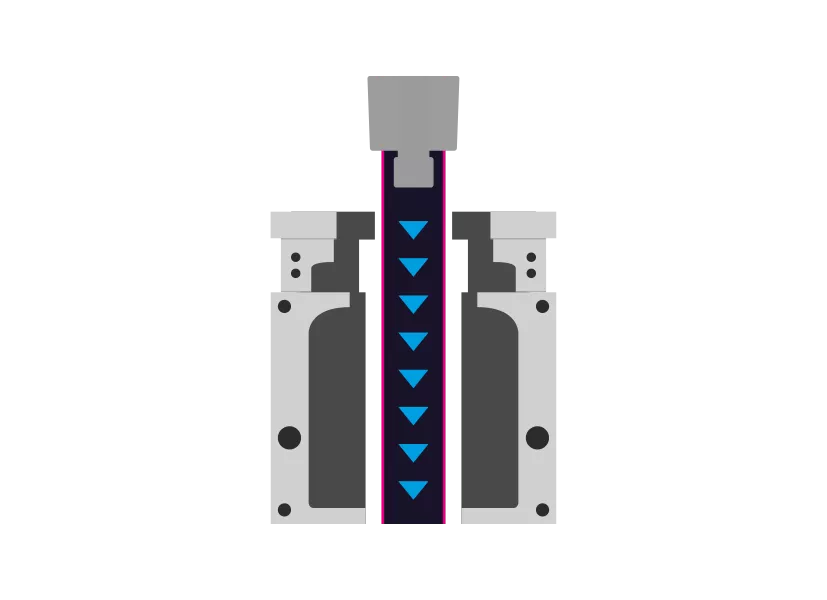
Schritt 1 - Extrudieren
Zunächst wird aus dem TPE ein Schlauch extrudiert. Dieser wird vom Blasformwerkzeug übernommen.
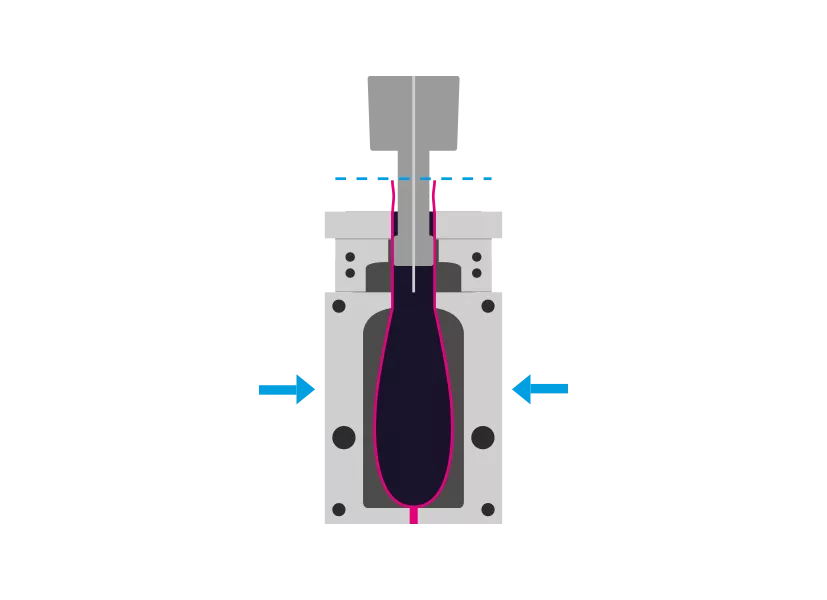
Schritt 2 - Formen
Das Werkzeug schließt, quetscht und verschweißt den Boden des Schlauches. Über einen Dorn wird der obere Bereich des Schlauches zur Form aufgeblasen. Zusätzlich kann mit Vakuum gearbeitet werden.
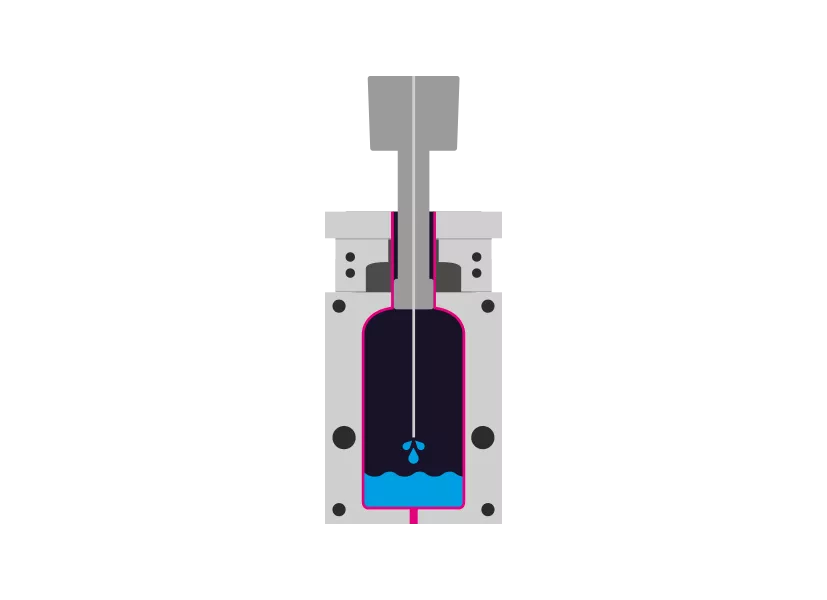
Schritt 3 - Füllen
Die Füllung gelangt ebenfalls aseptisch über den Dorn in die Form.
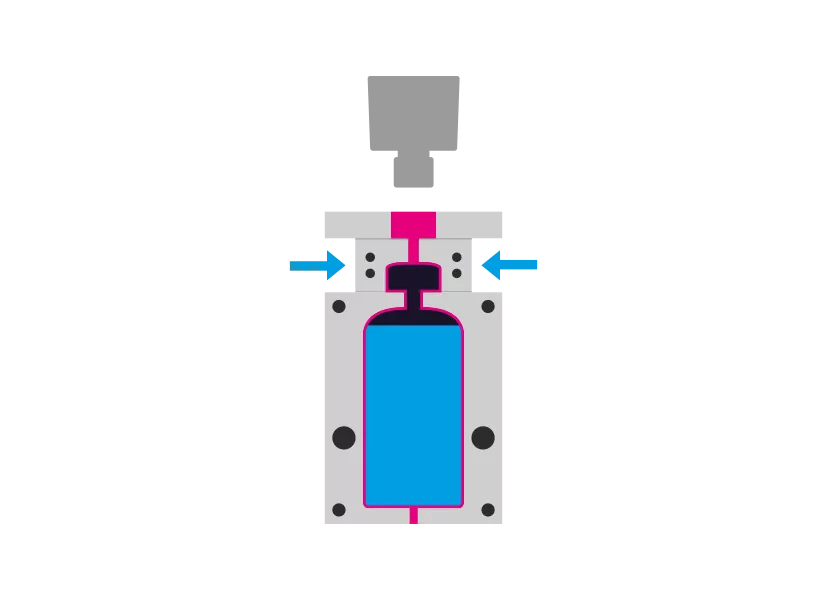
Schritt 4 - Verschließen
Der Dorn wird entfernt. Der Behälter erhält das gewünschte Verschlusssystem und wird aspetisch versiegelt.
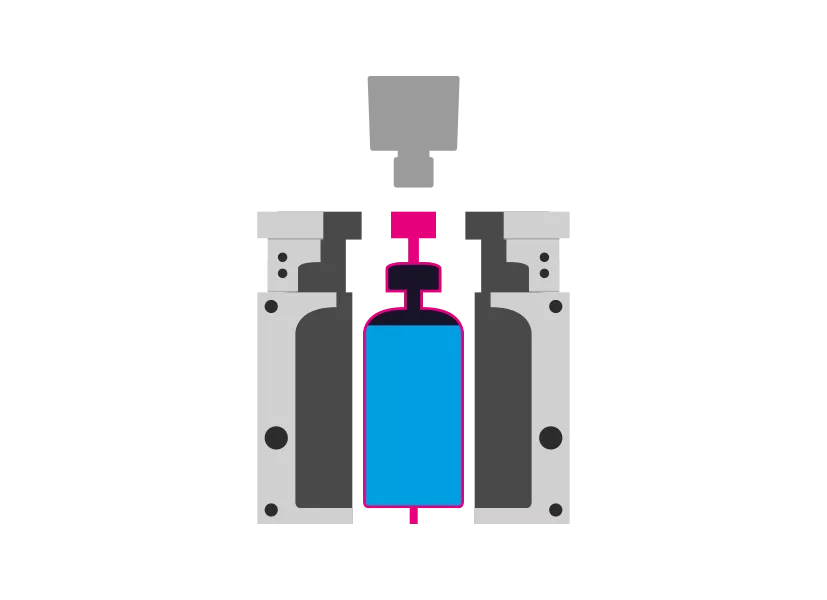
Schritt 5 - Entformen
Das Werkzeug öffnet sich und das Produkt wird entnommen. Der Prozess startet erneut.
Sprechen Sie mit unseren Experten!
Dominik Hilz
Market Segment Manager Medical Applications

Tel: +49 8638 9810-391
E-Mail: dominik.hilz@kraiburg-tpe.com
Oliver Kluge
Market Segment Manager Medical Applications

Tel: +49 8638 9810-479
E-Mail: oliver.kluge@kraiburg-tpe.com
Entdecken sie unsere medizinischen TPE Lösungen
THERMOLAST® M
THERMOLAST® H
Medical TPE
TPE for Blow-Fill-Seal Technology
A unique material solution for pharmaceutical packaging using the blow-fill-seal technology.
We developed a material solution for pharmaceutical packaging that opens up completely new possibilities compared to conventional solutions, particularly in the areas of usability and haptics.
The new thermoplastic elastomer (TPE) meets the changing demands of society: TPEs with soft, pleasant haptics, excellent usability, which can be sterilized at 121°C using the superheated steam process which retain their high transparency and mechanical properties even after sterilization. In addition, the TPEs have certified co-recyclability in the PP and HDPE waste streams.

With this material, we meet the previously unmet demands of the market to combine the flexibility of a polyethylene with the autoclavability at elevated temperatures of a polypropylene while maintaining transparency. These new products offer manufacturers completely new and unprecedented opportunities to package liquids in a compliant manner, and with unprecedented benefits for the user. We would be happy to present the solution in detail with reference to your specific project.
Oliver Kluge | Market Segment Manager Medical Applications at KRAIBURG TPE
OUR KNOW-HOW – YOUR ADVANTAGE
Manufacturers using the blow-fill-seal (BFS) process profit from the new solution of KRAIBURG TPE. The materials are Medical Grade Plastics and fit into the portfolio of THERMOLAST® M compounds - thus meeting the requirements of VDI 2017. The new high-end THERMOLAST® M compounds are aimed directly at manufacturers of medical substances as well as developers of packaging systems.
OUR Partners
Rommelag: The processability of the new compounds has already been confirmed for this process by tests at Rommelag. Rommelag is one of the world's leading suppliers of blow-fill-seal technology, a process for the aseptic filling and packaging of liquids and semisolids.


Borealis contributed to the development of the new compounds, providing one of its Bormed™ medical grades as a base. As one of the world's leading providers of advanced and sustainable polyolefin solutions, Borealis partnered with KRAIBURG TPE to create a material solution that meets the changing demands of society.
WHAT DOES BLOW-FILL-SEAL MEAN?
The blow-fill-seal manufacturing process combines several steps of aseptic drug manufacturing into one system. In the first initial step, material is extruded into a mold to form a single-dose container. Next, the liquid product is filled and immediately sealed from the environment. All this is achieved in one process without human intervention.
The Blow-Fill-Seal Process at a glance - Just five steps for the finished product
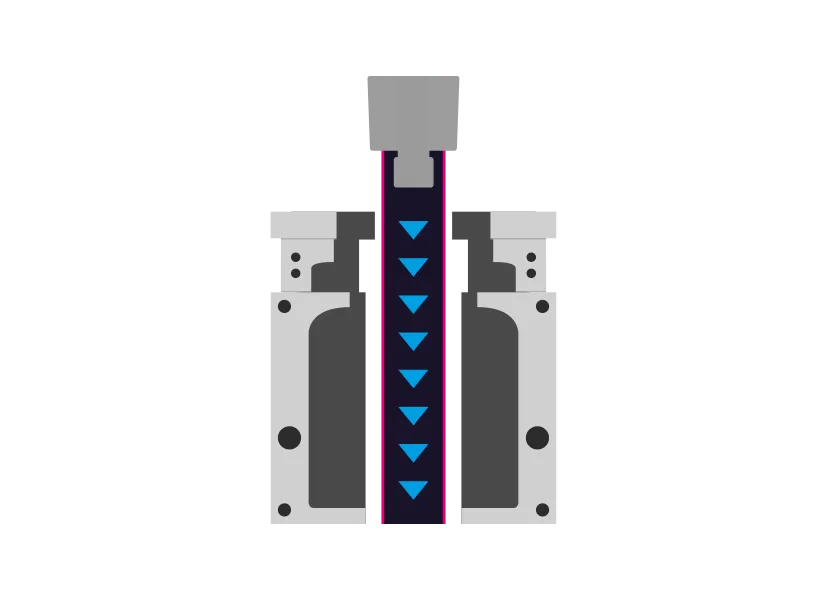
Step 1 - Extrusion
First, a tube is extruded from the TPE. This is then used by the blow molding tool.
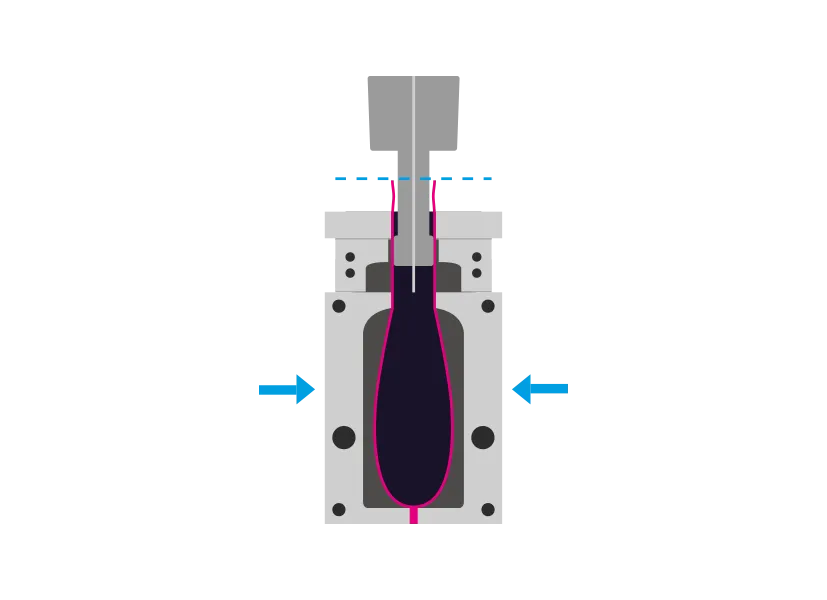
Step 2 - Molding
The tool closes, squeezes and welds the bottom of the hose. A mandrel is used to inflate the upper part of the tube to the mold. Additionally, vacuum can be used.
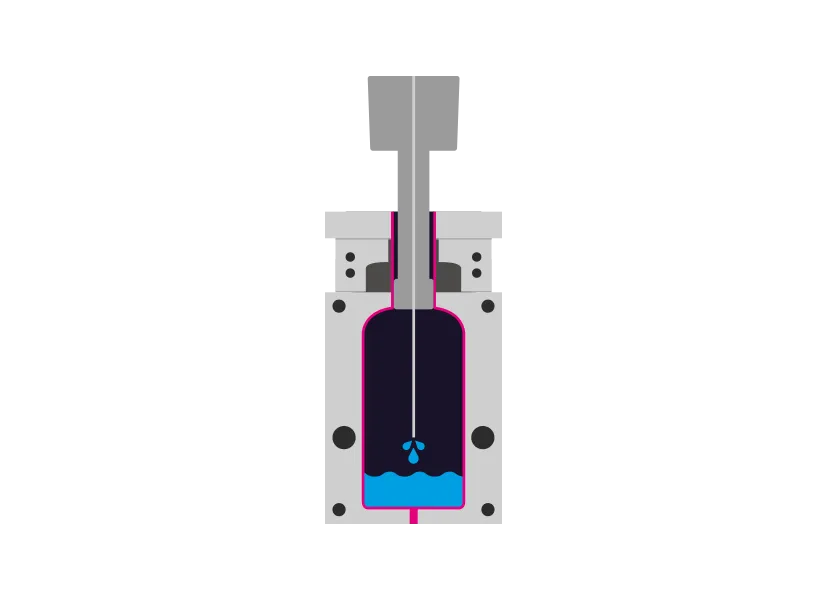
Step 3 - Filling
The filling also enters the mold aseptically via the mandrel.
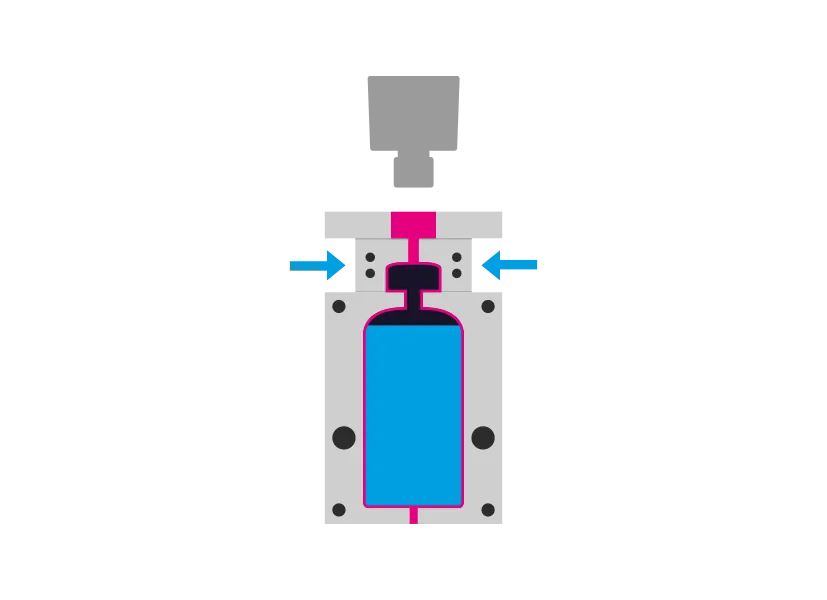
Step 4 - Sealing
The mandrel is removed. The container is receives the desired closure system and is sealed aseptically.
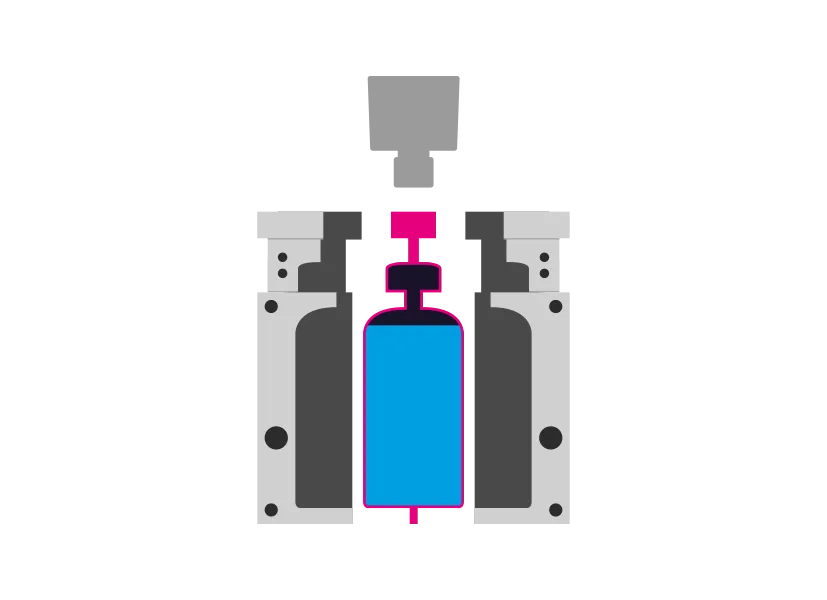
Step 5 - Demolding
The mold opens and the product is removed. The process starts again.
Contact our Team of Experts
Reach out to us for comprehensive details into how we can positively impact your business.
Discover more
Medizinisches TPE
Medizinisches TPE - Für Pharma und Medizin: Unsere ausgewählten TPE-Materialien sind sterilisierbar und im direkten Blutkontakt einsetzbar.
Medizinisches TPE
Medizinisches TPE - Für Pharma und Medizin: Unsere ausgewählten TPE-Materialien sind sterilisierbar und im direkten Blutkontakt einsetzbar.
Medical TPE Clone
Learn about our high-performance TPE solutions designed specifically for the medical sector. Our materials meet stringent regulatory requirements while providing flexibility and durability for a wide range of medical devices. Medical TPE - thermoplastic elastomers for the pharmaceutical and medical sector.
医療用TPE
製薬・医療分野向け:当社の専用TPE材料は滅菌処理に対応し、また血液に直接接触する用途での使用が可能です。
Medizinisches TPE
Medizinisches TPE - Für Pharma und Medizin: Unsere ausgewählten TPE-Materialien sind sterilisierbar und im direkten Blutkontakt einsetzbar.
THERMOLAST® H
Thermoplastic Treasure H is a brand-new TPE series designed specifically for the healthcare and medical device markets in the Asia-Pacific region. These unique TPE materials offer high-quality material solutions that comply with various global food contact and related medical standards, including ISO 10993-5 (cytotoxicity) and GB/T 16886.5.