

吹灌封专用 TPE
适用于吹灌封药品包装技术的解决方案
我们开发了一款适用于药品包装的材料解决方案。与传统方案相比,该方案开辟了新的可能性,尤其是在材料耐用性与触感方面。
这款新型热塑性弹性体 (TPE) 满足了社会不断发展变化的需求:TPE 触感柔软舒适,经久耐用,可使用过热蒸汽工艺在 121℃ 下进行消毒。即使在消毒后,仍能保持高透明度和机械性能。此外,在废料循环回收中的实验证明,TPE 可以与PP和HDPE一起回收。

通过开发该款材料,我们满足了此前未实现的市场需求,在保持透明度的同时,将聚乙烯的柔韧性与聚丙烯在高温下的高压灭菌性结合在一起。这些新产品为制造商开辟了新的世界,以前所未有的全新方式,规范包装液体,也为用户带来了不曾体会的实打实好处。我们很乐意针对您的具体项目,提供详细的解决方案。
Oliver Kluge | Market Segment Manager Medical Applications at KRAIBURG TPE
我们具有深厚的专业知识,可为您带来绝佳优势
凯柏胶宝® 的新材料解决方案会为采用吹-灌-封 (BFS) 工艺的制造商带来诸多益处。我们的材料为医用级塑料,属于热塑宝 M 化合物组合系列,符合 VDI 2017 要求。新型高端热塑宝 M 化合物直接针对医疗物质制造商和包装系统开发商而设计。
我们的合作伙伴
Rommelag: 新型化合物的可加工性已在 Rommelag 开展的试验中得到了证实。Rommelag 是一家世界领先的吹灌封技术供应商。吹灌封技术是一种针对液体和半固体的无菌灌装和包装工艺。

Borealis 以其中一款 Bormed™ 医疗级产品为基础,Borealis 为新型化合物的开发作出了贡献。作为一家世界领先的先进和可持续聚烯烃解决方案提供商,Borealis 与凯柏胶宝® 合作开发了一款材料解决方案,满足社会不断发展变化的需求。
什么是吹灌封技术?
1
吹灌封生产工艺是将无菌药物生产中的多个步骤集中到了一个系统。在第一步中,将材料挤进模型,形成单剂量容器。接着,灌入液体产品,并立即密封,与环境隔绝。这些步骤在一套连续的工序中完成,无需人工介入。
快速了解吹灌封工艺 - 成品只需五步
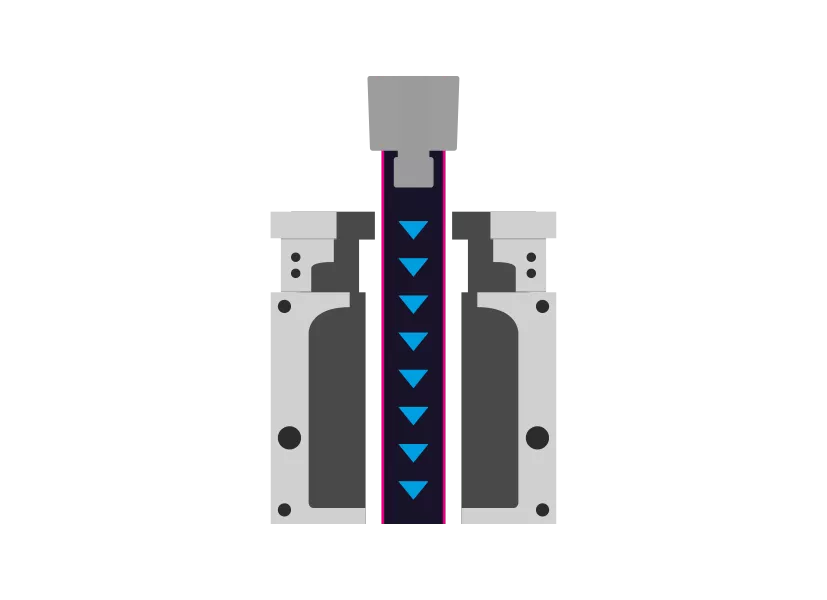
第 1 步 - 挤出
首先,用 TPE 挤出一根管子。然后接入吹模工具。
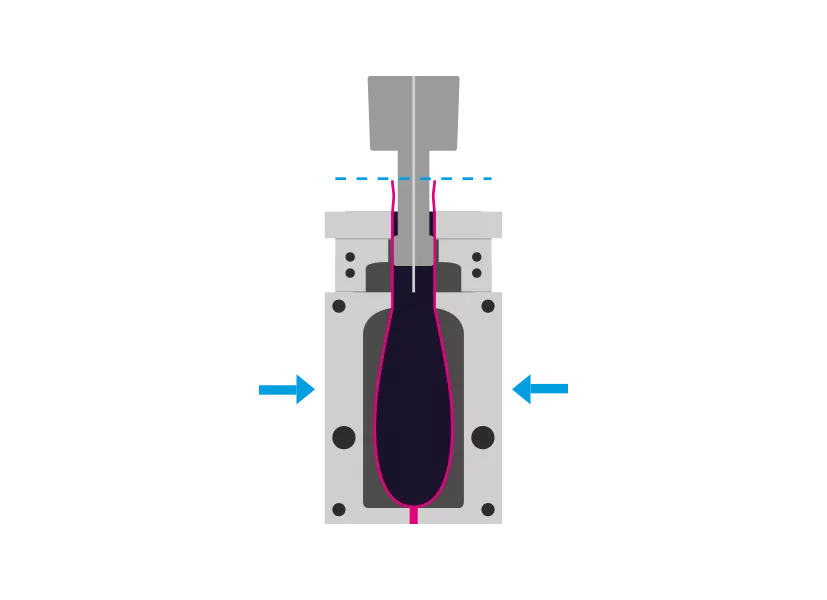
第 2 步 - 成型
工具关闭,挤压并焊接软管底部。将一根芯棒插入模具,对着管子上部充气。此外,也可以使用真空。
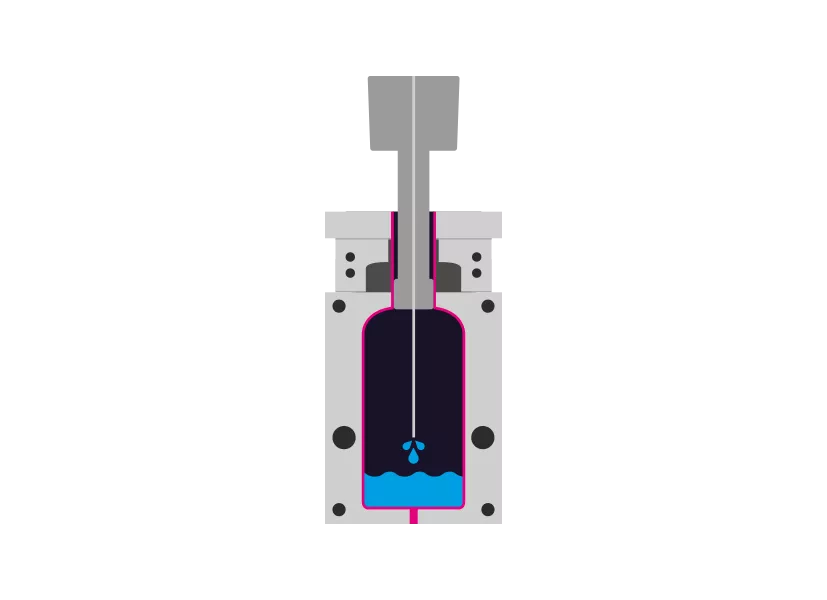
第 3 步 - 灌装
接着灌装液体通过芯棒进入模型,此过程也是无菌操作。
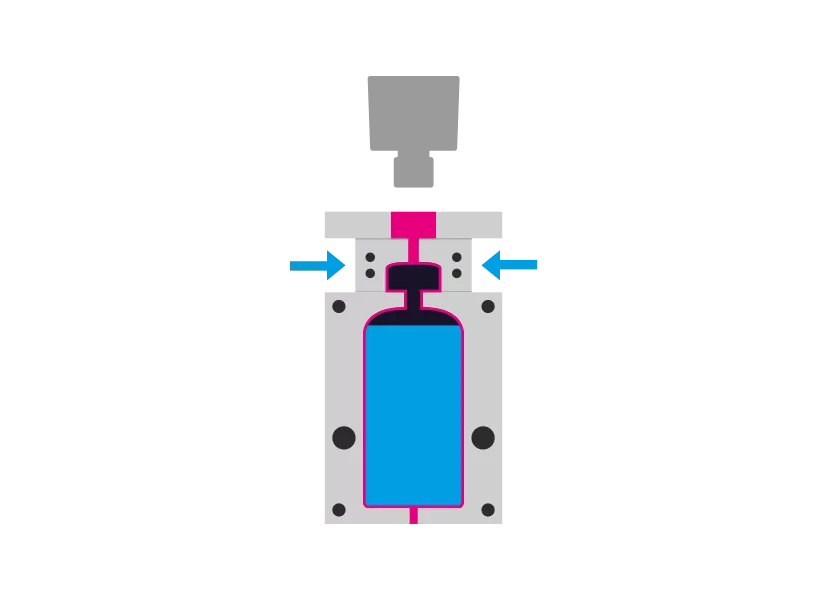
第 4 步 - 密封
取出芯棒。容器进入封口系统进行无菌密封。
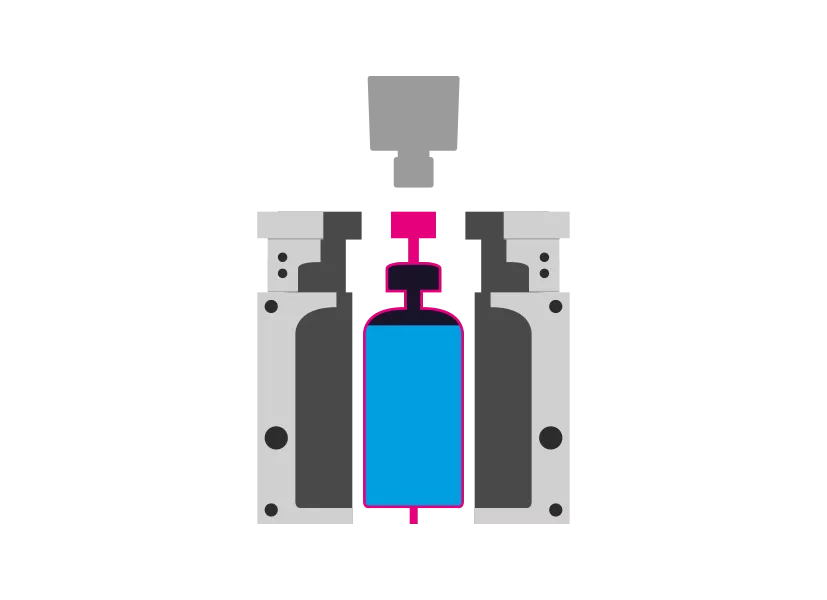
第 5 步 - 脱模
模具打开,产品取出。该流程再次循环。
联系我们!
Dominik Hilz
Market Segment Manager Medical Applications

Phone: +49 8638 9810-391
E-Mail: dominik.hilz@kraiburg-tpe.com
Oliver Kluge
Market Segment Manager Medical Applications

Phone: +49 8638 9810-479
E-Mail: oliver.kluge@kraiburg-tpe.com
了解更多
THERMOLAST® M
THERMOLAST® H
Medical TPE
TPE for Blow-Fill-Seal Technology
A unique material solution for pharmaceutical packaging using the blow-fill-seal technology.
We developed a material solution for pharmaceutical packaging that opens up completely new possibilities compared to conventional solutions, particularly in the areas of usability and haptics.
The new thermoplastic elastomer (TPE) meets the changing demands of society: TPEs with soft, pleasant haptics, excellent usability, which can be sterilized at 121°C using the superheated steam process which retain their high transparency and mechanical properties even after sterilization. In addition, the TPEs have certified co-recyclability in the PP and HDPE waste streams.

With this material, we meet the previously unmet demands of the market to combine the flexibility of a polyethylene with the autoclavability at elevated temperatures of a polypropylene while maintaining transparency. These new products offer manufacturers completely new and unprecedented opportunities to package liquids in a compliant manner, and with unprecedented benefits for the user. We would be happy to present the solution in detail with reference to your specific project.
Oliver Kluge | Market Segment Manager Medical Applications at KRAIBURG TPE
OUR KNOW-HOW – YOUR ADVANTAGE
Manufacturers using the blow-fill-seal (BFS) process profit from the new solution of KRAIBURG TPE. The materials are Medical Grade Plastics and fit into the portfolio of THERMOLAST® M compounds - thus meeting the requirements of VDI 2017. The new high-end THERMOLAST® M compounds are aimed directly at manufacturers of medical substances as well as developers of packaging systems.
OUR Partners
Rommelag: The processability of the new compounds has already been confirmed for this process by tests at Rommelag. Rommelag is one of the world's leading suppliers of blow-fill-seal technology, a process for the aseptic filling and packaging of liquids and semisolids.

Borealis contributed to the development of the new compounds, providing one of its Bormed™ medical grades as a base. As one of the world's leading providers of advanced and sustainable polyolefin solutions, Borealis partnered with KRAIBURG TPE to create a material solution that meets the changing demands of society.
WHAT DOES BLOW-FILL-SEAL MEAN?
The blow-fill-seal manufacturing process combines several steps of aseptic drug manufacturing into one system. In the first initial step, material is extruded into a mold to form a single-dose container. Next, the liquid product is filled and immediately sealed from the environment. All this is achieved in one process without human intervention.
The Blow-Fill-Seal Process at a glance - Just five steps for the finished product
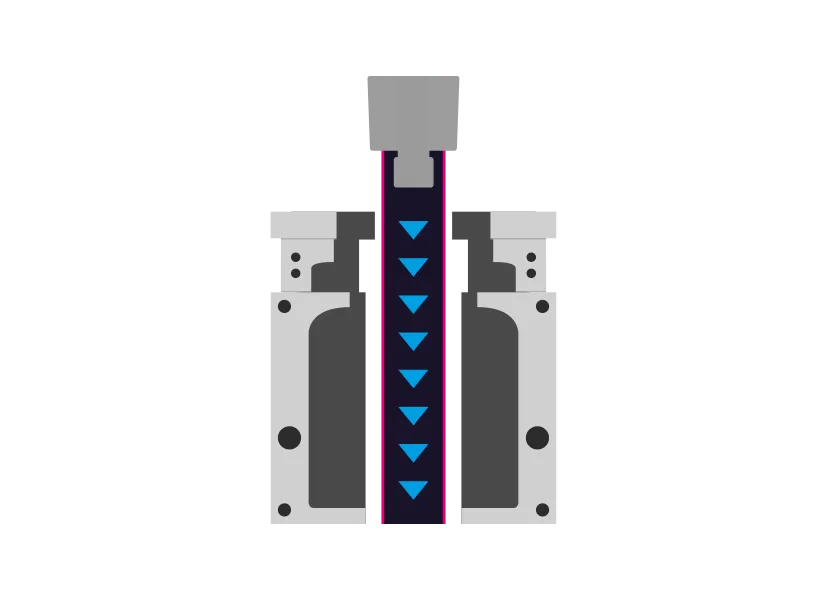
Step 1 - Extrusion
First, a tube is extruded from the TPE. This is then used by the blow molding tool.
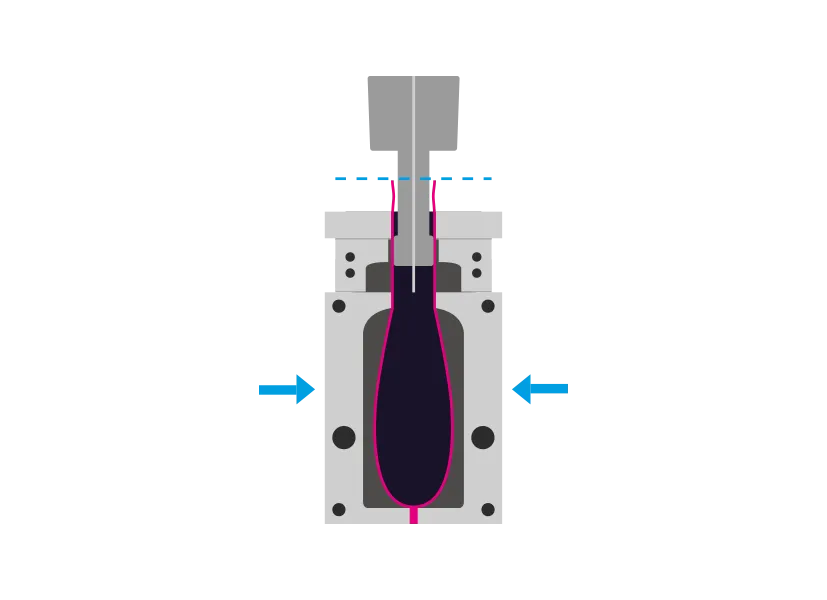
Step 2 - Molding
The tool closes, squeezes and welds the bottom of the hose. A mandrel is used to inflate the upper part of the tube to the mold. Additionally, vacuum can be used.
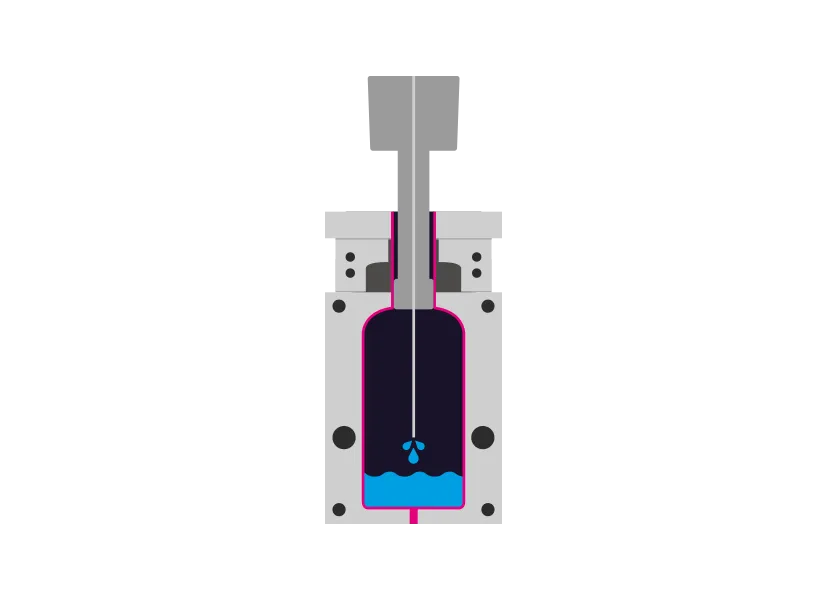
Step 3 - Filling
The filling also enters the mold aseptically via the mandrel.
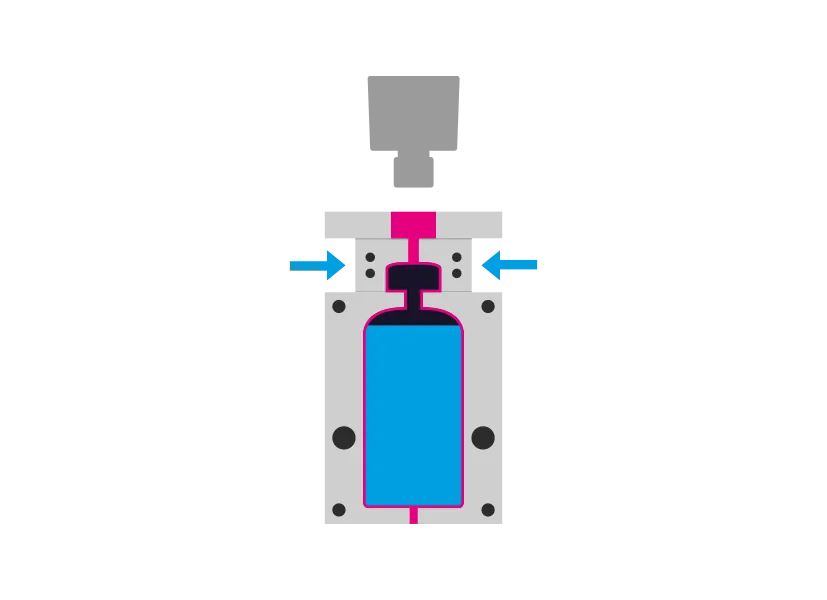
Step 4 - Sealing
The mandrel is removed. The container is receives the desired closure system and is sealed aseptically.
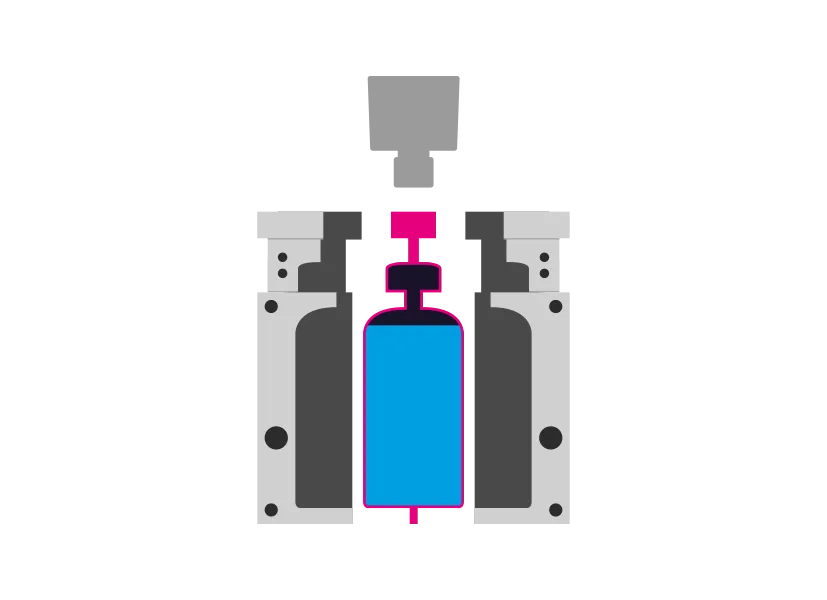
Step 5 - Demolding
The mold opens and the product is removed. The process starts again.
Contact our Team of Experts
Reach out to us for comprehensive details into how we can positively impact your business.
Discover more
医用级 TPE
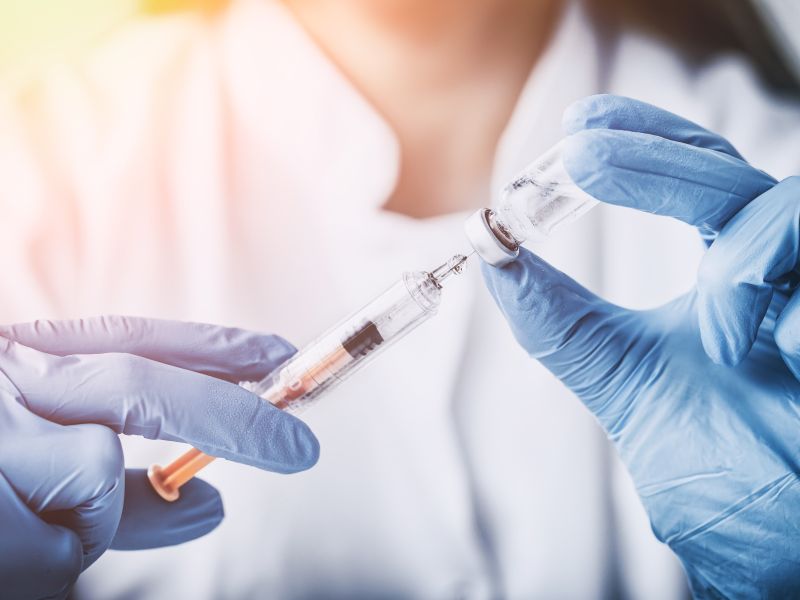
在制药和医疗领域,我们精心打造的 TPE 材料已进行消毒,可直接接触血液。
医用级 TPE
在制药和医疗领域,我们精心打造的 TPE 材料已进行消毒,可直接接触血液。
Medical TPE Clone
Learn about our high-performance TPE solutions designed specifically for the medical sector. Our materials meet stringent regulatory requirements while providing flexibility and durability for a wide range of medical devices. Medical TPE - thermoplastic elastomers for the pharmaceutical and medical sector.
医用级 TPE
在制药和医疗领域,我们精心打造的 TPE 材料已进行消毒,可直接接触血液。
医用级 TPE
在制药和医疗领域,我们精心打造的 TPE 材料已进行消毒,可直接接触血液。
热塑宝 H
热塑宝 H 是一个全新 TPE 系列,专为亚太医疗保健及医疗器材市场设计的TPE材料解决方案。这些化合物提供高质量的材料解决方案,且符合细胞毒性 ISO 10993-5、GB/T 16886.5 以及多项国际食品接触材料法规和相关医疗安全标准。