

TPE pour l'application du procédé Blow-Fill-Seal
Une solution matière unique pour les emballages pharmaceutiques fabriqués selon le procédé blow-fill-seal.
KRAIBURG TPE a développé une solution de matériaux pour les emballages pharmaceutiques qui ouvre de toutes nouvelles possibilités par rapport aux solutions traditionnelles, surtout dans les domaines de l'ergonomie et du toucher. Les nouveaux élastomères thermoplastiques (TPE) répondent à l'évolution des exigences de la société : des TPE au toucher doux et agréables, à l'excellente ergonomie, qui peuvent être stérilisés par le procédé de la vapeur à 121°C, et qui conservent leurs grandes transparences et leurs propriétés mécaniques même après la stérilisation. En outre, les TPE présentent une recyclabilité certifiée dans les flux de déchets PP et HDPE.

Avec ce nouveau produit, nous offrons aux fabricants des possibilités entièrement nouvelles et inédites d'emballer des liquides de manière conforme, avec une convivialité encore inégalée pour l'utilisateur. Nous nous ferons un plaisir de vous présenter la solution en détail, en fonction de votre projet concret.
Oliver Kluge | Market Segment Manager Medical Applications at KRAIBURG TPE
NOTRE SAVOIR-FAIRE – VOTRE AVANTAGE
La nouvelle solution de KRAIBURG TPE vise les applications fabriquées selon le procédé Blow-Fill-Seal (BFS). Les matériaux sont des plastiques élastomères de qualité médicale (MGP) et s'intègrent dans la gamme des compounds THERMOLAST® M - répondant ainsi aux exigences de la norme VDI 2017. Les nouveaux THERMOLAST® M Compounds haut de gamme sont destinés directement aux fabricants de substances médicales ainsi qu'aux développeurs de systèmes d'emballage.
Partenaire
Rommelag: L'aptitude à la transformation des nouveaux compounds a déjà été confirmée pour ce procédé par des tests effectués par Rommelag. Rommelag est l'un des principaux fournisseurs mondiaux de la technologie BFS (blow-fill-seal), un procédé de remplissage et de conditionnement aseptique de liquides et de semi-solides.


Borealis a contribué au développement des nouveaux compounds, en fournissant l’un de ses grades médicaux Bormed™ comme base. En tant que l’un des principaux fournisseurs mondiaux de solutions avancées et durables en polyoléfines, Borealis s’est associé à KRAIBURG TPE pour créer une solution matière qui répond aux exigences en constante évolution de la société.
QUE SIGNIFIE BLOW-FILL-SEAL ?
1Le processus de fabrication avec Blow-Fill-Seal regroupe plusieurs étapes de la fabrication aseptique de médicaments en un seul système. Dans la première étape, le matériau utilisé est extrudé dans un moule pour former un récipient à dose unique. Ensuite, le produit liquide est rempli et immédiatement scellé à l'environnement. Tout cela est réalisé en un seul processus, sans intervention humaine.
LE PROCESSUS DE SOUFFLAGE, REMPLISSAGE ET SCELLEMENT EN UN COUP D'ŒIL - CINQ ÉTAPES SEULEMENT POUR LE PRODUIT FINI
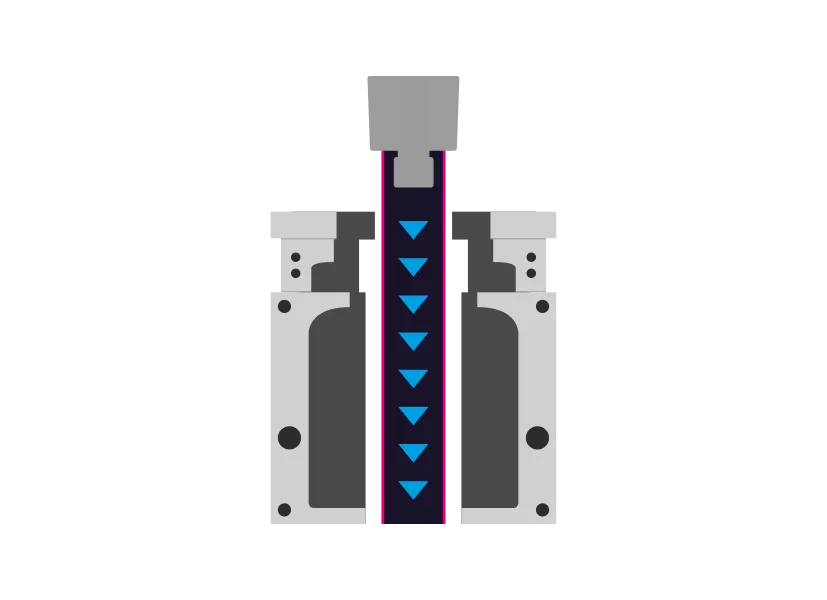
Étape 1 - Extrusion
Tout d'abord, un tube est extrudé à partir du TPE. Celui-ci est ensuite utilisé par soufflage dans le moule.
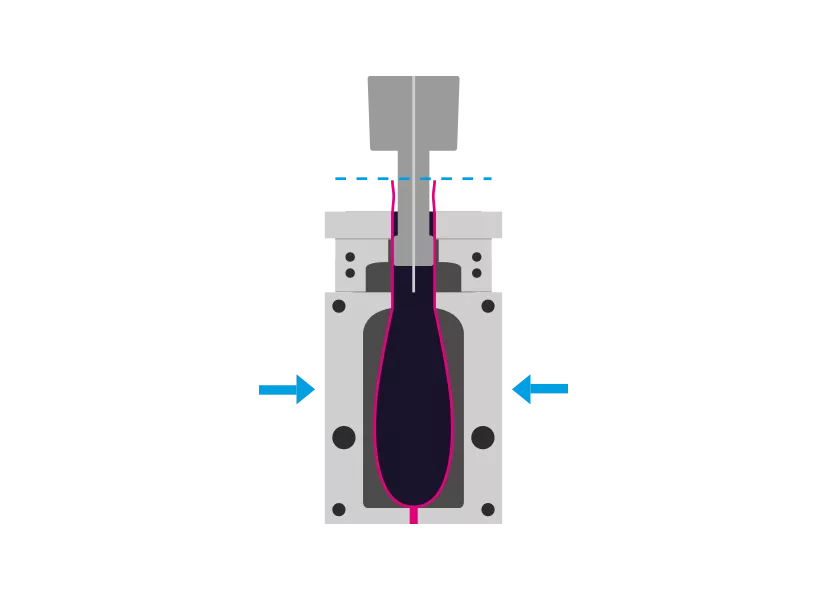
Étape 2 - Moulage
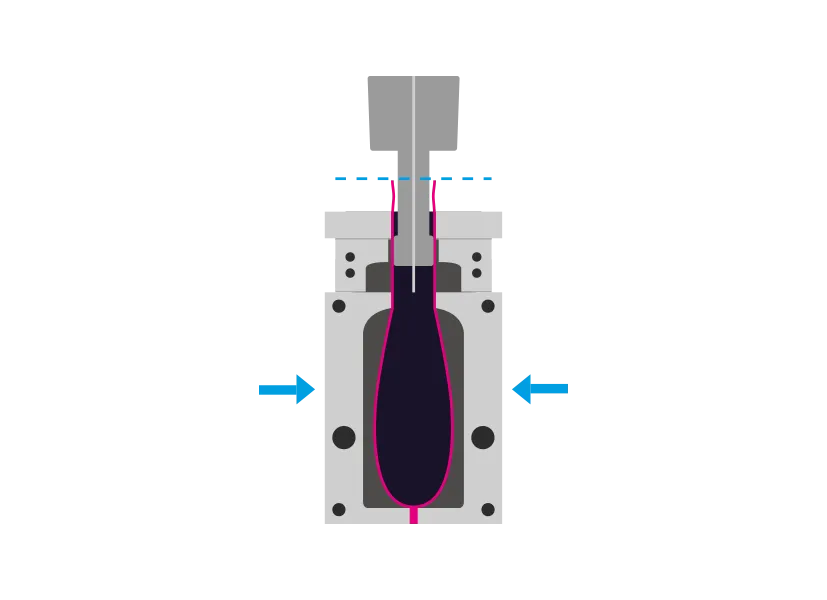
L'outil ferme, comprime et soude le bas du tuyau. Un mandrin est utilisé pour gonfler la partie supérieure du tube dans moule. En outre, le vide peut être utilisé.
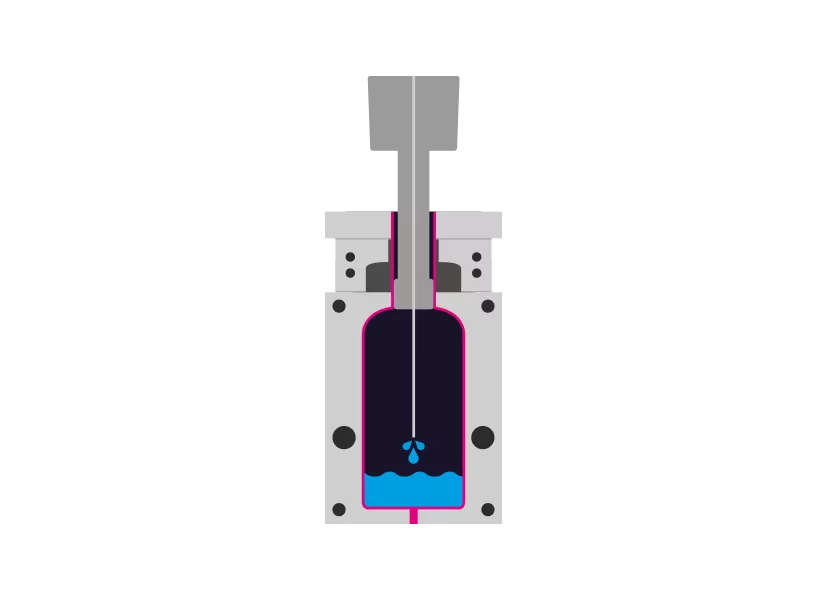
Étape 3 - Remplissage
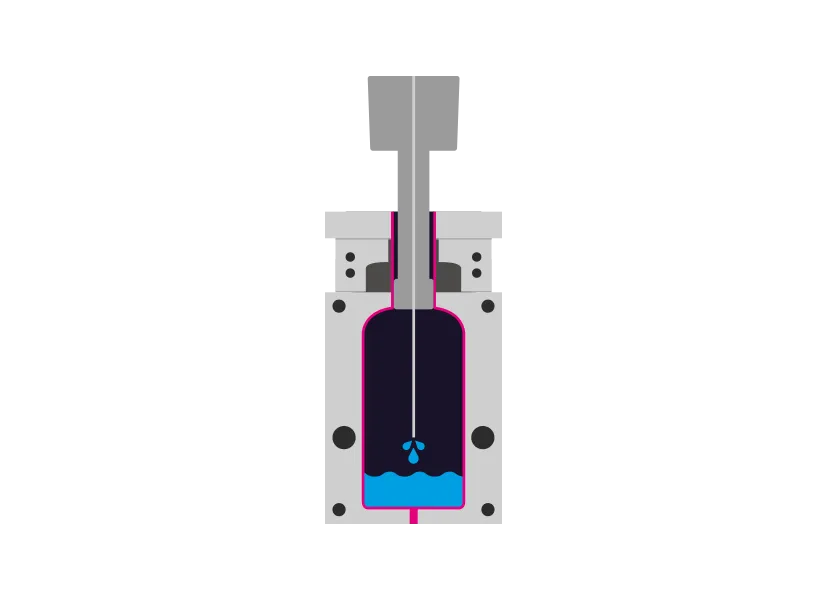
Le remplissage entre également dans le moule de manière aseptique via le mandrin.
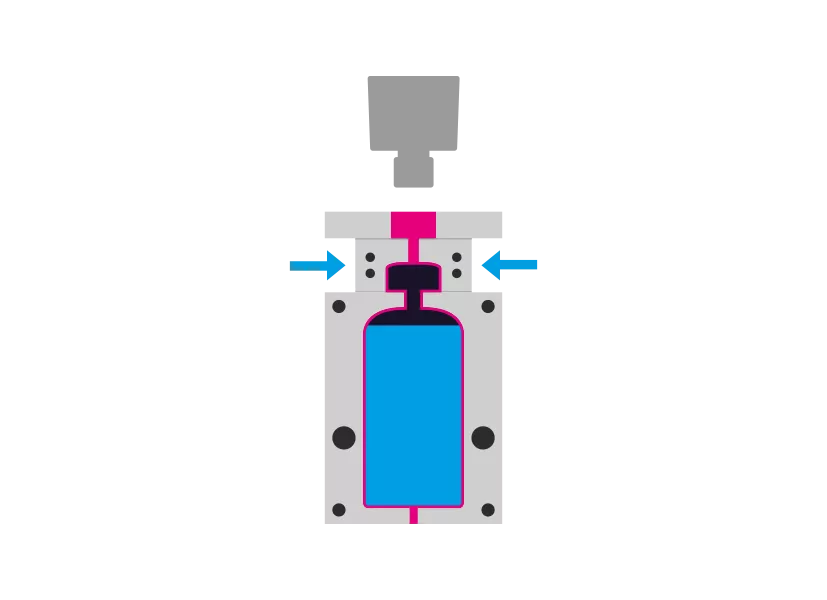
Étape 4 - Scellement
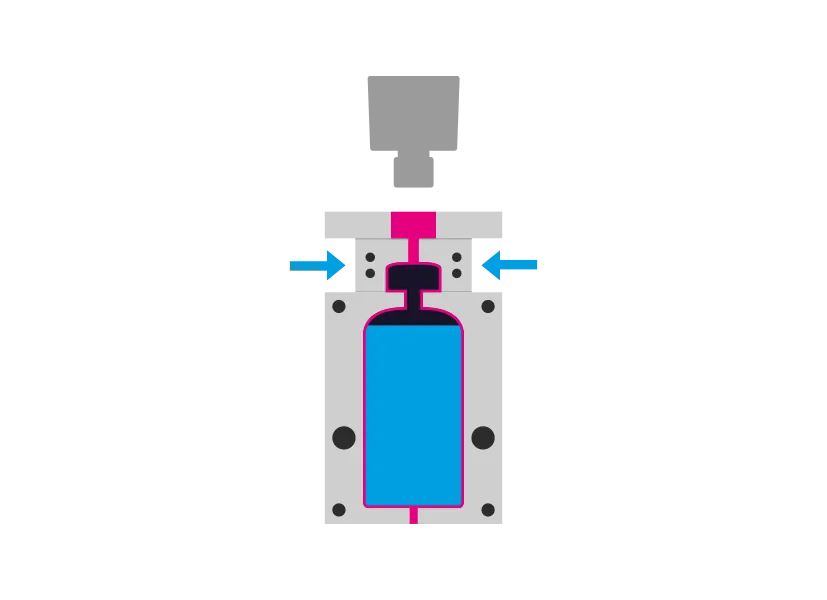
Le mandrin est retiré. Le récipient reçoit le système de fermeture souhaité et est scellé de manière aseptique.
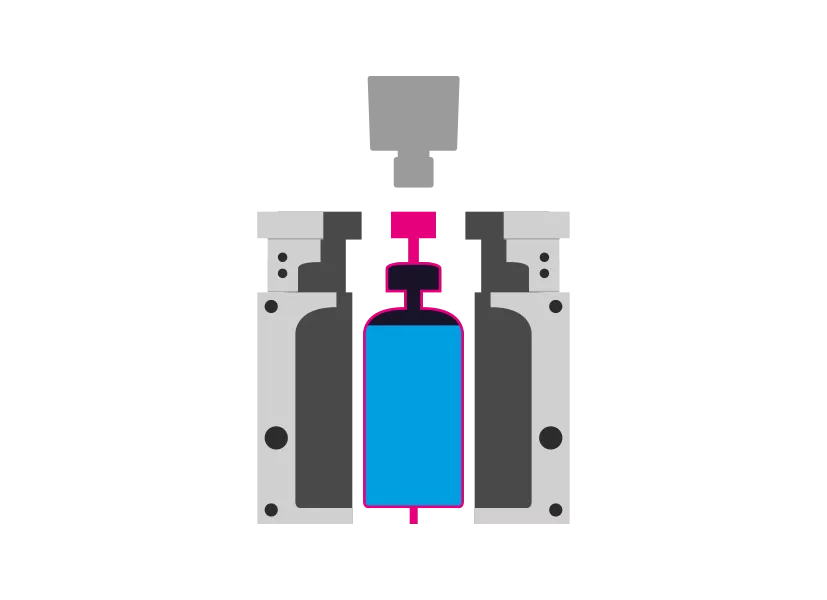
Étape 5 - Démoulage
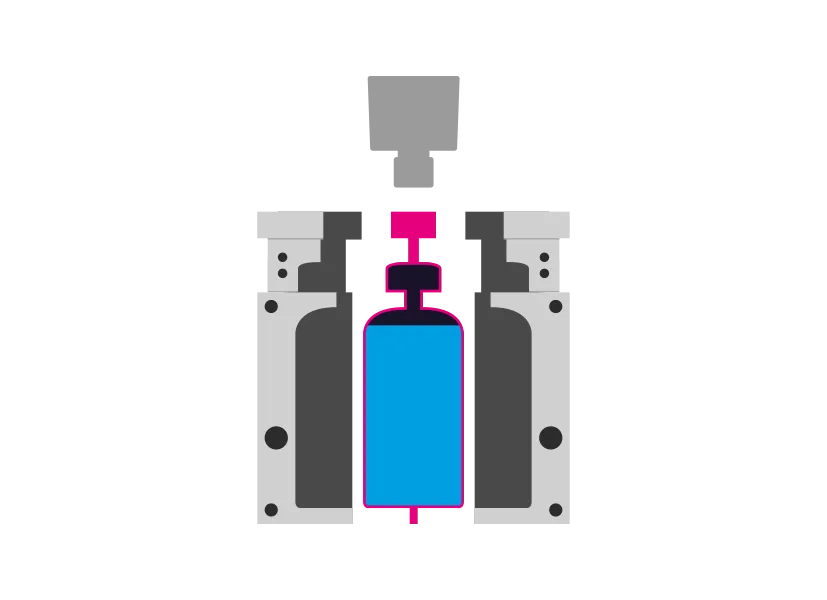
Le moule s'ouvre et le produit est retiré. Le processus recommence.
Nous contacter
Cyril Marquet
Key Account Manager France at KRAIBURG TPE

Phone: +33 6 42 55 45 22
E-Mail: cyril.marquet@kraiburg-tpe.com
Oliver Kluge
Market Segment Manager Medical Applications

Phone: +49 8638 9810-479
E-Mail: oliver.kluge@kraiburg-tpe.com
DÉCOUVRIR PLUS
THERMOLAST® M
THERMOLAST® H
Medical TPE
TPE for Blow-Fill-Seal Technology
A unique material solution for pharmaceutical packaging using the blow-fill-seal technology.
We developed a material solution for pharmaceutical packaging that opens up completely new possibilities compared to conventional solutions, particularly in the areas of usability and haptics.
The new thermoplastic elastomer (TPE) meets the changing demands of society: TPEs with soft, pleasant haptics, excellent usability, which can be sterilized at 121°C using the superheated steam process which retain their high transparency and mechanical properties even after sterilization. In addition, the TPEs have certified co-recyclability in the PP and HDPE waste streams.

With this material, we meet the previously unmet demands of the market to combine the flexibility of a polyethylene with the autoclavability at elevated temperatures of a polypropylene while maintaining transparency. These new products offer manufacturers completely new and unprecedented opportunities to package liquids in a compliant manner, and with unprecedented benefits for the user. We would be happy to present the solution in detail with reference to your specific project.
Oliver Kluge | Market Segment Manager Medical Applications at KRAIBURG TPE
OUR KNOW-HOW – YOUR ADVANTAGE
Manufacturers using the blow-fill-seal (BFS) process profit from the new solution of KRAIBURG TPE. The materials are Medical Grade Plastics and fit into the portfolio of THERMOLAST® M compounds - thus meeting the requirements of VDI 2017. The new high-end THERMOLAST® M compounds are aimed directly at manufacturers of medical substances as well as developers of packaging systems.
OUR Partners
Rommelag: The processability of the new compounds has already been confirmed for this process by tests at Rommelag. Rommelag is one of the world's leading suppliers of blow-fill-seal technology, a process for the aseptic filling and packaging of liquids and semisolids.

Borealis contributed to the development of the new compounds, providing one of its Bormed™ medical grades as a base. As one of the world's leading providers of advanced and sustainable polyolefin solutions, Borealis partnered with KRAIBURG TPE to create a material solution that meets the changing demands of society.
WHAT DOES BLOW-FILL-SEAL MEAN?
The blow-fill-seal manufacturing process combines several steps of aseptic drug manufacturing into one system. In the first initial step, material is extruded into a mold to form a single-dose container. Next, the liquid product is filled and immediately sealed from the environment. All this is achieved in one process without human intervention.
The Blow-Fill-Seal Process at a glance - Just five steps for the finished product
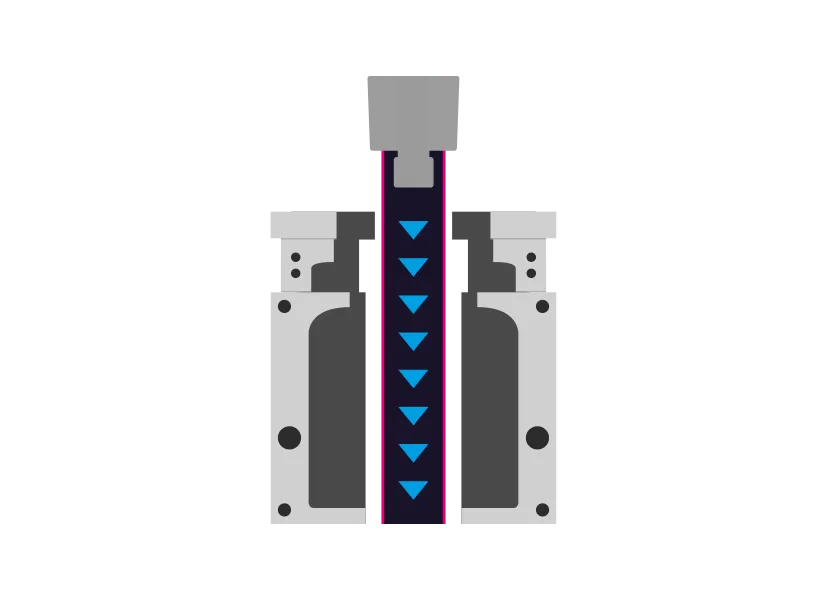
Step 1 - Extrusion
First, a tube is extruded from the TPE. This is then used by the blow molding tool.
Step 2 - Molding
The tool closes, squeezes and welds the bottom of the hose. A mandrel is used to inflate the upper part of the tube to the mold. Additionally, vacuum can be used.
Step 3 - Filling
The filling also enters the mold aseptically via the mandrel.
Step 4 - Sealing
The mandrel is removed. The container is receives the desired closure system and is sealed aseptically.
Step 5 - Demolding
The mold opens and the product is removed. The process starts again.
Contact our Team of Experts
Reach out to us for comprehensive details into how we can positively impact your business.
Discover more
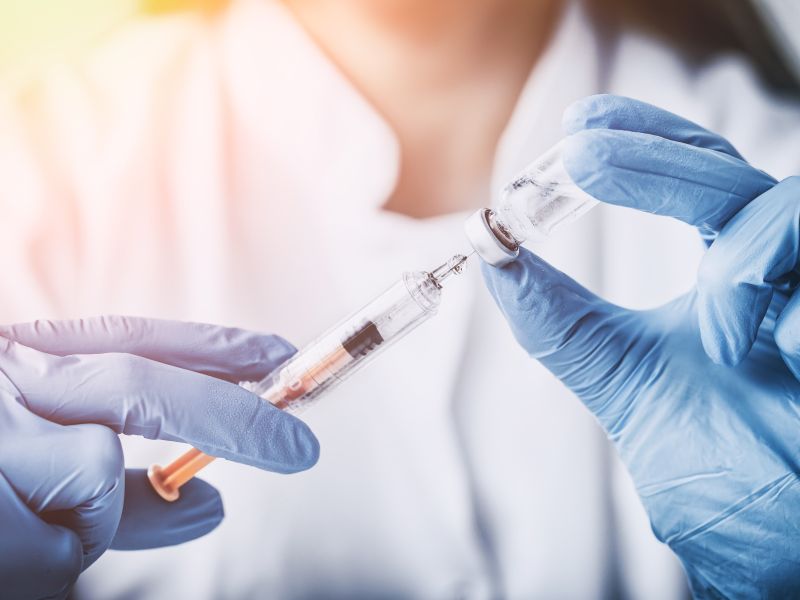
TPE POUR LE DOMAINE MÉDICAL
TPE POUR LE DOMAINE MÉDICAL- Nos TPE sélectionnés sont stérilisables et utilisables en contact direct avec le sang.
TPE POUR LE DOMAINE MÉDICAL
TPE POUR LE DOMAINE MÉDICAL- Nos TPE sélectionnés sont stérilisables et utilisables en contact direct avec le sang.
Medical TPE Clone
Learn about our high-performance TPE solutions designed specifically for the medical sector. Our materials meet stringent regulatory requirements while providing flexibility and durability for a wide range of medical devices. Medical TPE - thermoplastic elastomers for the pharmaceutical and medical sector.
TPE POUR LE DOMAINE MÉDICAL
TPE POUR LE DOMAINE MÉDICAL- Nos TPE sélectionnés sont stérilisables et utilisables en contact direct avec le sang.
TPE POUR LE DOMAINE MÉDICAL
TPE POUR LE DOMAINE MÉDICAL- Nos TPE sélectionnés sont stérilisables et utilisables en contact direct avec le sang.
THERMOLAST® H
Thermoplastic Treasure H is a brand-new TPE series designed specifically for the healthcare and medical device markets in the Asia-Pacific region. These unique TPE materials offer high-quality material solutions that comply with various global food contact and related medical standards, including ISO 10993-5 (cytotoxicity) and GB/T 16886.5.