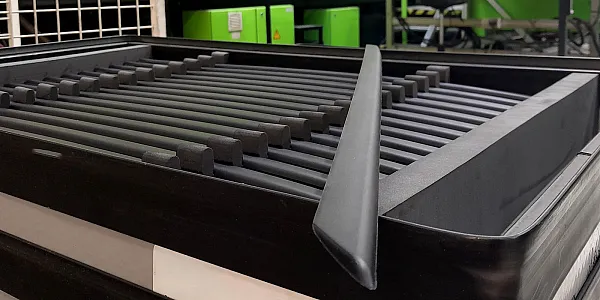

How Can Livestock Farming Equipment Achieve Greater Durability? KRAIBURG TPE Breeds Reliable Performance in Livestock Farming Tools with TPE
What is the best material for livestock farming equipment? Discover how KRAIBURG TPE provides durable TPE solutions with excellent PP adhesion, efficient processing, and compliance with global safety standards.
As the livestock farming industry continues to evolve with increasing demands for smarter and more efficient operations, equipment manufacturers and engineers are placing greater emphasis not only on equipment functionality and operational efficiency, but also on material durability, flexibility, processability, and long-term performance. Therefore, selecting the right material for livestock farming equipment has become a key consideration in agricultural equipment development.
KRAIBURG TPE, a global manufacturer of thermoplastic elastomers and customized material solutions for diverse industries, offers high-performance thermoplastic elastomers (TPEs) used in a wide range of applications, including agricultural and livestock farming, delivering flexibility, durability and processability.
Why Are More Livestock Farming Equipment Manufacturers Choosing TPE Materials?
KRAIBURG TPE’s material compounds exhibit excellent adhesion to polypropylene (PP), enabling efficient overmolding that combines rigid and soft components. This results in stronger bonding between parts of livestock farming equipment for fail-safe performance even with constant use.
Efficient processing and zero-waste manufacturing
For livestock farming equipment, material selection is driven not only by production efficiency but also by sustainability considerations.
KRAIBURG TPE’s material compounds are free-flowing granules that enable superior processability, with the ability to be processed using standard injection molding for thermoplastics. Likewise, innovative materials support in-process recycling, allowing manufacturers to reduce material waste and improve production efficiency.
Compliance with global safety standards
Beyond performance, livestock farming equipment also demands higher standards for material safety and regulatory compliance.
KRAIBURG TPE’s material compounds meet key regulatory requirements, including Regulation (EU) No 10/2011, US FDA CFR 21 (raw material conformity), and EN 71-3, ensuring material safety and compliance.
Recyclability of materials for circularity
KRAIBURG TPE’s material compounds are compatible with both HDPE and PP recycling streams, as certified by Cyclos HTP, resulting in effective recycling and supporting circular material use. In addition, they are ISCC PLUS ready (mass balance approach), contributing to more sustainable and responsible material sourcing.
Colorability for functionality and design flexibility
KRAIBURG TPE’s material compounds offer excellent colorability, allowing flexible product design and enabling functional color coding or visual differentiation in farming equipment. The materials being colorable in-mass ensures color is prevented from peeling or fading coatings that could affect long-term usability.
Sustainability from the get-go
At KRAIBURG TPE, sustainability drives our innovation. Our portfolio includes bio-based TPEs and compounds with post-consumer (PCR) and post-industrial (PIR) recycled content. Selected TPEs are certified under GRS and ISCC PLUS. We also provide Product Carbon Footprint (PCF) data upon request to support sustainability decisions.
We proudly earned the EcoVadis Gold Medal in 2025 and are committed to the Science Based Targets initiative (SBTi), aligning our goals with global climate action.
From reducing emissions to increasing circularity, our sustainable TPEs deliver reliable performance and are available worldwide to support your applications while advancing your sustainability goals.
Get in touch today to learn how KRAIBURG TPE can support your sustainability and product development journey.
Discover More with TPE:Enhance everyday life with versatile TPE solutions designed for safety, comfort, and creativity. From pet toys to water storage solutions, our materials help deliver better performance and smarter design in the products you use every day.
Disclaimer: The applications mentioned are illustrative of material capabilities only. Final product suitability and regulatory compliance must be assessed and validated by the customer.
FAQ
-
What are the best materials for durable livestock farming equipment?
1Livestock farming equipment is commonly made from engineering plastics, metals, rubber, and thermoplastic elastomers (TPEs). Among these materials, TPEs are increasingly preferred because they combine flexibility, durability, and ease of processing. They also support modern manufacturing methods while providing long-lasting performance in demanding agricultural environments.
-
What materials are safe for equipment used around livestock and animal feed?
1Materials used in livestock farming equipment should meet recognized food contact and safety regulations when required. Certain TPE compounds comply with Regulation (EU) No. 10/2011 and US FDA CFR 21 raw material requirements, making them suitable for applications where material safety, hygiene, and regulatory compliance are essential.
-
What should manufacturers consider when choosing materials for livestock farming equipment?
1When selecting materials for livestock farming equipment, manufacturers typically consider durability, flexibility, chemical resistance, ease of processing, regulatory compliance, recyclability, and long-term performance. TPE materials are often selected because they provide a balanced combination of these properties while supporting reliable and sustainable product design.
Press Asia Pacific
Bridget Ngang
Marketing Manager Asia Pacific