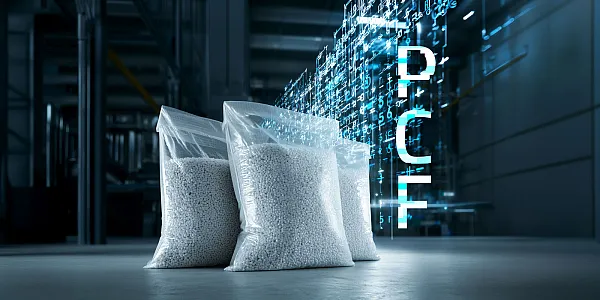
TPEs take to 3D printing applications
The 3D printing process has in recent years been making great strides in the automotive, medical, industrial and consumer markets. A process that was once limited to prototyping, 3D printing is today more often being used for small batch production and to manufacture spare parts.
Thus, the evolving 3D printing technology, which is implemented in an open material feed system, provides enormous potential for significant savings of time, work and costs involved in developing new applications.
TPEs or thermoplastic elastomers are now being used as 3D printable materials for the additive manufacturing industry, especially when soft polymers are required.
KRAIBURG TPE, a global TPE manufacturer, offers a broad slate of TPE compounds with a wide range of features, making them a suitable choice for various applications when it comes to 3D printing.
KRAIBURG TPE also offers compounds with a wide range of TPE hardness, from super soft <10 Shore A to 66 Shore D.
TPEs for customization
The 3D printing technology allows the ability to customize designs to suit the specific needs of products. This is where KRAIBURG TPE’s THERMOLAST® K product series comes into the picture.
The THERMOLAST® K TPE compound allows the possibility for customization and different properties in the 3D printing process – like haptic surface touch for handles or low surface friction for smooth parts.
Furthermore, extremely detailed surfaces can be produced with very soft TPEs. Another benefit is that a variety of color options are afforded with TPE compounds, allowing the freedom of design flexibility.
For industry sectors that are looking at improving a product’s impact on the environment, TPEs are a specifically good choice as the materials are recyclable. The compounds are also free of latex, PVC and phthalates, and feature low odor and reduced emissions.
Prototyping made easy with TPEs
The 3D printing technology is gaining popularity for products that are targeted at outdoor activity usage and prototyping, especially in high-performance applications. KRAIBURG TPE’s compounds offer excellent UV and weather resistance, enabling the materials to withstand the harsh environment and climate.
Possible applications for KRAIBURG TPE’s compounds are fasteners, gaskets, seals, adapters, handles, grips and more.
Other advantages of KRAIBURG TPE compounds are that they are well established with numerous certifications. For example, for the consumer market, KRAIBURG TPE compounds are in compliance with various regulations and approvals such as China’s GB standards (中国国标), EU Directive 10/2011, the EN71/3 European safety standard for toys, as well as the Food and Drugs Administration (FDA) Code of Federal Regulations (CFR), Title 21.
Medical and healthcare industry
As a result of the high regulations regarding safety in the medical industry, TPEs are the perfect choice.
Furthermore, KRAIBURG TPE’s compounds comply with recognized medical standards such as USP Class VI, DIN ISO 10993-4,-5,-10,-11, and VDI 2017 Medical Grade Plastics.
Offered in the range of compounds is the THERMOLAST® M, which is a specially developed medical-grade TPE for medical, pharmaceutical, and diagnostic applications.
Possible applications of the THERMOLAST® M compounds include masks, straps, fastness, seals and more.
Press Asia Pacific
Bridget Ngang
Marketing Manager Asia Pacific

KRAIBURG TPE en un coup d’œil
- Siège et site de production: Waldkraiburg, Allemagne
- Sièges régionaux et sites de production: Kuala Lumpur, Malaisie / Atlanta, Etats-Unis
- Produits: compounds élastomères thermoplastiques
- Marques: THERMOLAST®, COPEC®, HIPEX® et For Tec E®
- Marchés: Europe, Amérique, Asie Pacifique
- Collaborateurs : 660