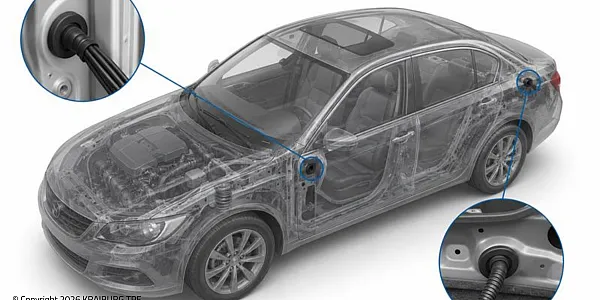

Durable and Safe TPE Material for AED Applications
What makes medical TPE suitable for AED manufacturing? The material is specifically designed for healthcare applications, offering biocompatibility, strong adhesion to engineering plastics, and reliable mechanical performance.
Automated external defibrillators (AEDs), a portable, lightweight electronic device designed to save the life of someone experiencing sudden cardiac arrest, require high standards of reliability and safety. Materials used in AED components must comply with strict medical regulations while delivering consistent performance. Thermoplastic elastomers (TPEs) are well suited for AED applications due to their durability, flexibility, chemical resistance, and insulating properties, making them ideal for grips, cables, seals, and protective housings.
KRAIBURG TPE, a global manufacturer of thermoplastic elastomer materials and customized material solutions offers its medical TPE compounds as a specialized solution for healthcare and medical device applications in the Asia Pacific. For AED applications, these compounds meet stringent performance and safety requirements.
Global standards approved for medical applications
THERMOLAST® H compounds comply with ISO 10993-5 and GB/T 16886.5 cytotoxicity standards, ensuring biocompatibility for devices that may come into contact with users, and meet Regulation (EU) No 10/2011 and US FDA CFR 21 raw material requirements. The compounds are sterilizable via autoclave at 121°C and ethylene oxide (EtO) processes and are free from animal-derived ingredients, heavy metals and toxic substances.
Strong adhesion for multimaterial design
Medical TPE materials offer excellent adhesion to a wide range of polar thermoplastics, including polycarbonate (PC), acrylonitrile butadiene styrene (ABS), PC/ABS blends, ASA, SAN, PET, PETG, and polystyrene (PS). This broad adhesion enables the design of integrated components such as soft-touch grips, protective housings, and functional seals with strong, reliable bonding. The result is improved durability and greater user confidence in emergency situations.
Processing efficiency and material adaptability
These materials are suitable for injection molding and extrusion, offering optimized flow properties for efficient processing and consistent product quality. They enable the precise manufacturing of complex components such as switches, seals, membranes, and flexible connections. The materials are available in natural colors and are fully colorable for branding, differentiation, and identification.
Soft touch advantage for broader application
The compounds provide a soft-touch surface that improves grip and handling, making them excellent material for an array of medical and healthcare applications, including functional and design elements, soft-touch grips, switches, mats, seals, valves, membranes, and flexible connections. This versatility allows manufacturers to standardize materials across different medical devices while maintaining compliance and performance.
Sustainability from the get-go
At KRAIBURG TPE, sustainability drives our innovation. Our portfolio includes bio-based TPEs and compounds with post-consumer (PCR) and post-industrial (PIR) recycled content. Selected TPEs are certified under GRS and ISCC PLUS. We also provide Product Carbon Footprint (PCF) data upon request to support sustainability decisions.
We proudly earned the EcoVadis Gold Medal in 2025 and are committed to the Science Based Targets initiative (SBTi), aligning our goals with global climate action.
From reducing emissions to increasing circularity, our sustainable TPEs deliver reliable performance and are available worldwide to support your applications while advancing your sustainability goals.
Get in touch today to learn how KRAIBURG TPE can support your sustainability and product development journey.
Discover More with TPE: Committed to innovation and regulatory compliance, KRAIBURG TPE supports manufacturers in developing safe, durable, and high-performance products for healthcare and medical devices applications, such as otoscope, ultrasound device and wheelchair.
Disclaimer: The applications mentioned are illustrative of material capabilities only. Final product suitability and regulatory compliance must be assessed and validated by the customer.
FAQ
-
Is TPE suitable for automated external defibrillators (AEDs)?
1Yes, TPEs combine flexibility, durability, chemical resistance, and electrical insulation properties, making them ideal for AED components such as grips, seals, cables, switches, and protective housings. These characteristics help ensure reliable performance in critical emergency situations.
-
Which medical standards do TPE compounds comply with?
1The compounds comply with:
- ISO 10993-5 cytotoxicity requirements
- GB/T 16886.5 biocompatibility standards
- Regulation (EU) No 10/2011 raw material requirements
- US FDA CFR 21 raw material requirements
These certifications support their use in a variety of healthcare and medical device applications.
-
Are these medical TPE compounds free from harmful substances?
1Yes. THERMOLAST® H compounds are free from:
- Animal-derived ingredients
- Heavy metals
- Toxic substances
This helps manufacturers meet stringent healthcare industry requirements.
Press Asia Pacific
Bridget Ngang
Marketing Manager Asia Pacific