
Advanced TPE Materials for In-Car Robot Assistant
How can KRAIBURG TPE enhance in-car robot assistants? By offering soft-touch, durable, low-odor TPE materials with reliable adhesion and colorability for automotive interiors.
Driver-assist technology is the in-thing in the automotive market. Advanced interactive vehicle systems with robot assistants improve user experience, safety, and driving efficiency. These systems integrate physical controls, digital interfaces, and functional design elements, relying on materials such as thermoplastic elastomers (TPEs) for durability, comfort, and consistent performance.
KRAIBURG TPE, a global manufacturer of TPEs and customized solutions for various industries, produces automotive-grade soft touch TPE compounds that combine high-performance mechanics with smooth-surface ergonomics, offering a TPE solution for in-car robot assistants as well as functional and design components enhanced with non-sticky TPE quality.
Reliable adhesion and efficient processing
KRAIBURG TPE materials exhibit excellent adhesion to PC, ABS, PC/ABS, ASA, and SAN, streamlining insert molding and overmolding processes while ensuring strong, reliable bonds. As an automotive interior TPE, these materials allow designers to create compact, integrated components with fewer manufacturing steps and simpler assembly, while improving part reliability and maintaining consistent quality in high-volume production. In addition, their sealing capability against dust and water supports the protection of sensitive components, enhancing durability and long-term performance in demanding in-car environments.
Soft-touch comfort for flawless interaction
KRAIBURG TPE materials deliver a soft, non-sticky surface that enhances the tactile experience of thumb wheels, push buttons, and switches, while elevating ergonomic handling and reinforcing a sense of premium quality even under frequent or intensive use. The material also provides anti-rattle and damping functionality, helping to reduce noise and vibration for a quieter, more refined in-cabin experience.
Low odor, versatile colorability
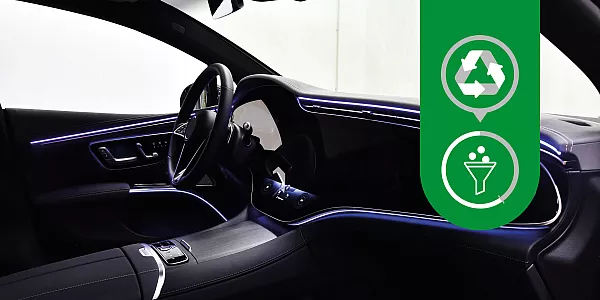
KRAIBURG TPE compounds render controlled emissions and low odor, making them a fit TPE material for car interior applications. Their full colorability ensures seamless integration across functional zones, design accents, and branding elements, enhancing overall sophistication and visual harmony in-cabin in automotive interiors.
Suited for in-car robot assistants application
KRAIBURG TPE materials are ideal for in-car robotic assistant components such as thumb wheels, push buttons, switches, seals, handles, and other functional or design elements. Their durability, adhesion, soft-touch feel, and versatile coloring options ensure user-friendly, high-quality automotive interiors with consistent production results.
Sustainability from the get-go
At KRAIBURG TPE, sustainability drives our innovation. Our portfolio includes bio-based TPEs and compounds with post-consumer (PCR) and post-industrial (PIR) recycled content. Selected TPEs are certified under GRS and ISCC PLUS. We also provide Product Carbon Footprint (PCF) data upon request to support sustainability decisions.
We proudly earned the EcoVadis Gold Medal in 2025 and are committed to the Science Based Targets initiative (SBTi), aligning our goals with global climate action.
From reducing emissions to increasing circularity, our sustainable TPEs deliver reliable performance and are available worldwide to support your applications while advancing your sustainability goals.
Get in touch today to learn how KRAIBURG TPE can support your sustainability and product development journey.
Discover More with TPE: From car interior applications to car phone holder, explore how our TPE solutions bring safety, durability, and innovation into everyday living.
Disclaimer: The applications mentioned are illustrative of material capabilities only. Final product suitability and regulatory compliance must be assessed and validated by the customer.
Press Asia Pacific
Bridget Ngang
Marketing Manager Asia Pacific